 Sagano Bamboo Forest
Is the Sagano Bamboo Forest Worth It?
So, is the bamboo forest in Kyoto worth it? Asked at 7:30 on a clear morning, with light cutting sideways through the stalks and the corridor nearly empty, absolutely. Asked at noon, shuffling a 400-metre path with a coach party, honestly, less so. This page takes the question seriously instead of defending the postcard: what the grove actually is, when it earns the trip across town, and the three paid fixes for its two real problems.
Quick answer
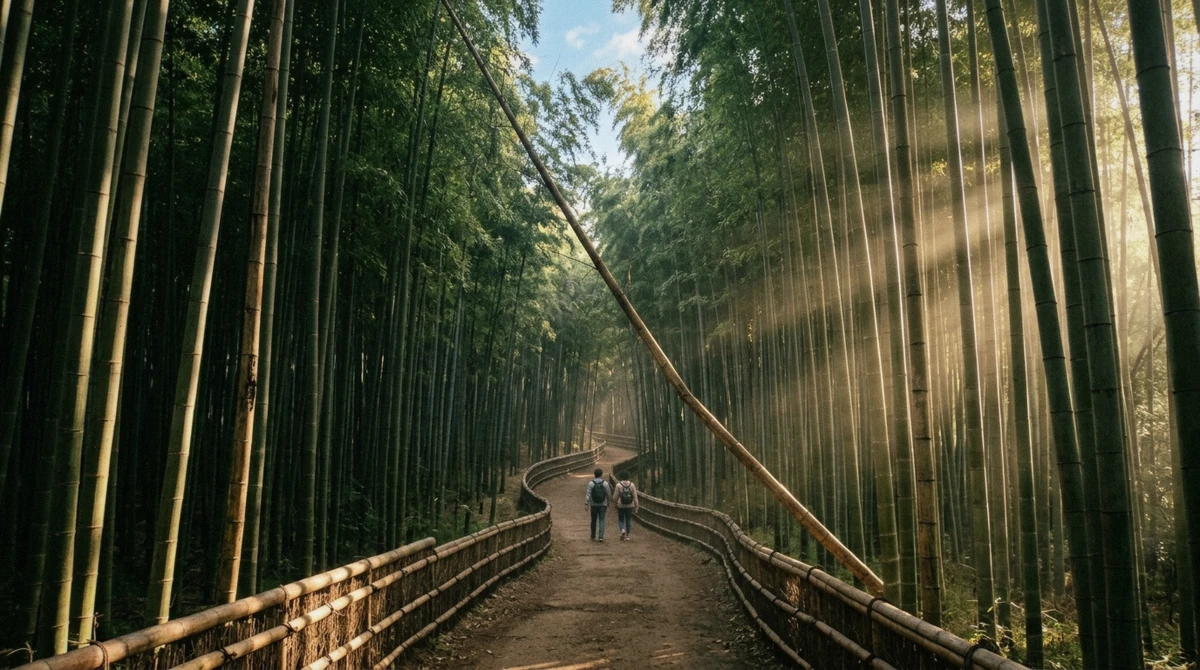
The Sagano Bamboo Forest is worth it for nearly everyone who arrives before 8:00 or after 17:00 and accepts it for what it is: a free, ten to fifteen minute walk through a genuinely striking corridor of bamboo, not a half-day attraction. It stops being worth it at noon in high season, when the path is a slow-moving queue for photographs.
Key takeaways
- Entry is free and the grove never closes; the main path runs about 400 meters, 10 to 15 minutes end to end
- Go before 8:00 or after 17:00. Coaches fill the path 10:00 to 16:00
- The postcard shot with nobody in frame comes from the rickshaw-only lane, closed to walkers
- Pair it with Tenryu-ji or Okochi-Sanso to fill a real morning; the walking hike covers the full loop and its costs
- Guided Sagano Bamboo Forest tours that bundle temples and transport run from $50.49
- November through early December, maple color at the neighboring temples makes this the single busiest stretch of the year
Two Ways to See It
The rickshaw ride and the all-inclusive bus day sit at opposite ends of the catalog here, one buying access to a closed lane, the other bundling the grove into a full day of Kyoto's headline temples. Both are compared in full below.
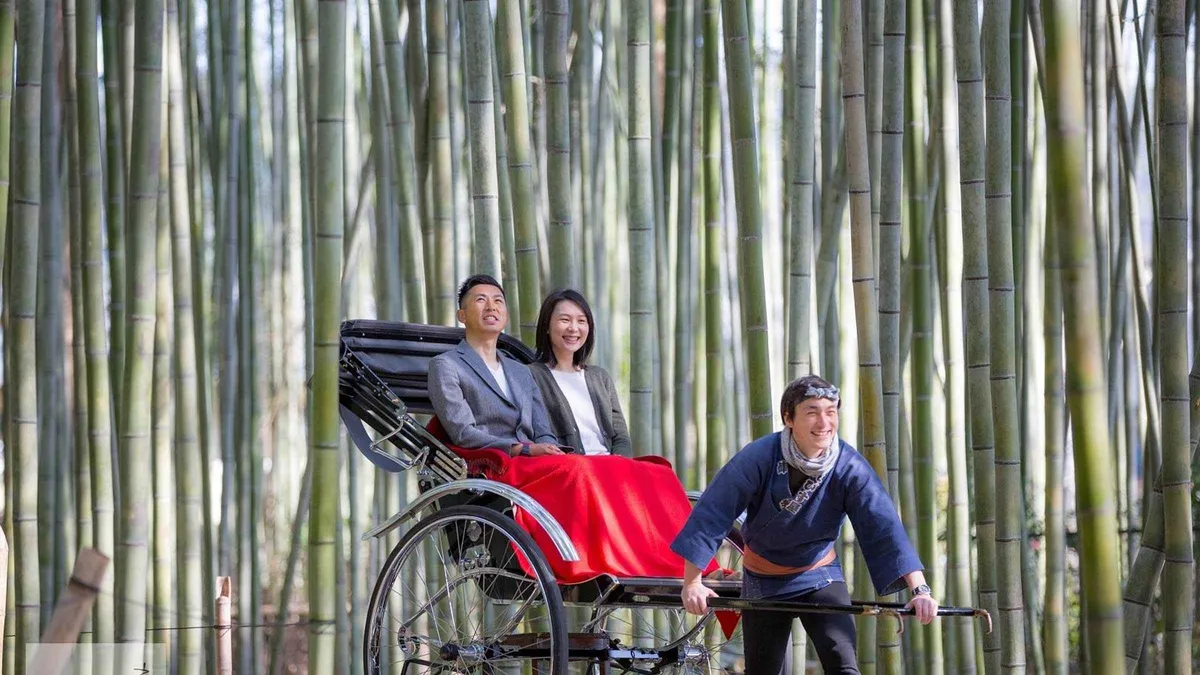
Kyoto: Arashiyama Customized Rickshaw Tour & Bamboo Forest
A private rickshaw with your own puller-guide, and the single biggest thing money can buy here: access to the fenced rickshaw-only lane through the bamboo, the stretch walkers never enter. Four lengths from 45 minutes to just over 3 hours; longer options add Rakushisha cottage and Nison-in.
- Cancellation
- Free cancellation 24h
- Operator
- Ebisuya Rickshaw
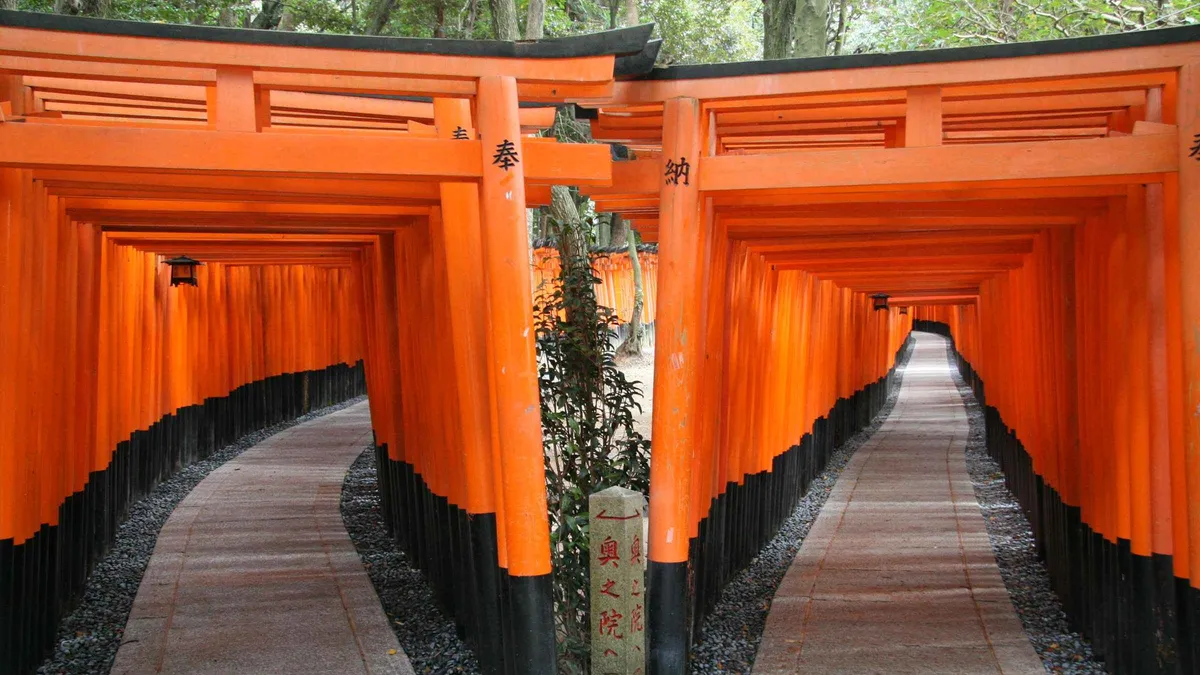
Kyoto: Fushimi Inari, Kinkakuji, Bamboo Grove 1 Day Bus Tour
The most-reviewed listing in this catalog by a wide margin: 4.8 from 5,217 bookings. An all-inclusive day — Kiyomizu-dera, Sanjusangendo, Tenryu-ji, the bamboo grove, Kinkaku-ji and Fushimi Inari — with four temple admissions, Japanese buffet lunch option and audio guides in six languages.
- Cancellation
- Free cancellation 24h
- Operator
- Japan Panoramic Tours
The Short Answer
Worth it, with two conditions
Sagano and Arashiyama are the same grove under two names: Sagano is the district north of the Katsura River, Arashiyama is the neighborhood everyone actually says, and the bamboo forest sits inside both. The path itself, signed Chikurin-no-Komichi, is a slow uphill stroll from the Nonomiya Shrine end to the gate of Okochi-Sanso, stalks closing overhead the whole way. It photographs exactly like it looks in person, which is rarer than it should be for a sight this famous.
The two conditions are timing and expectations. Go outside the 10:00 to 16:00 window and the path is close to empty; go at noon in April or November and it is a shuffling line. Expect a ten-minute walk and you leave satisfied; expect a destination that fills a morning on its own and you will feel shortchanged.
- Worth it if: you can arrive before 8:00 or after 17:00, you are already routing through Arashiyama for a temple or two, you want a free stop between other Kyoto plans, you are fine with a short, single-path walk rather than a sprawling forest
- Skip it if: your only free window is midday in peak season, you are expecting an empty jungle path with nobody else in it, you have one day in Kyoto and prefer to spend it on temples instead, you cannot manage a gentle uphill gravel path
What It Actually Costs
The path is free, the extras are not
There has been no entry fee for the Sagano Bamboo Forest since 2015, and the grove itself has no gate, no ticket booth and no closing time. Whatever you spend on the visit goes on transport and on the neighboring sights that give the morning shape. The table below lines up the realistic options, from walking in for nothing to booking a full day around the grove.
| Option | Typical price | Duration | Best for |
|---|---|---|---|
| Free self-guided walk | $0 (transit extra) | 10 to 15 minutes | Anyone already in Arashiyama for a temple or the station |
| Walk-up rickshaw at the bridge | ¥7,500 to ¥9,000 per person | 30 to 45 minutes | Travelers who did not book ahead and can wait for a puller |
| Booked rickshaw tour | from $50.49 | 45 to 190 minutes | Anyone who wants the closed rickshaw-only lane guaranteed |
| All-inclusive bus day | from $95.94 | 8.5 to 9 hours | First-timers who want Kiyomizu-dera, Kinkaku-ji and Fushimi Inari bundled with the grove |
Reading that table honestly
Walking the grove itself costs nothing beyond the train fare to get there, and that is genuinely the whole visit for a lot of travelers. The rickshaw tour earns its price by reaching a stretch of bamboo the free path cannot show you at all, which is the subject of the section below. The bus day earns its price by turning a ten-minute stop into one line item inside a full day of Kyoto's headline temples, so the per-sight cost looks better once you count everything else on the itinerary.
What Ten Minutes Actually Buys
The path, and what money adds to it
Walk in from the Nonomiya Shrine end and the bamboo closes overhead within a minute, stalks packed close enough that the sky reduces to a moving pattern of green and light. The path is gravel, gently uphill, wide enough for two people to pass, and it runs about 400 meters to the gate of Okochi-Sanso villa at the top. There is nothing to buy inside it and nothing to do beyond walk it, which is exactly the ten to fifteen minutes it takes most people.
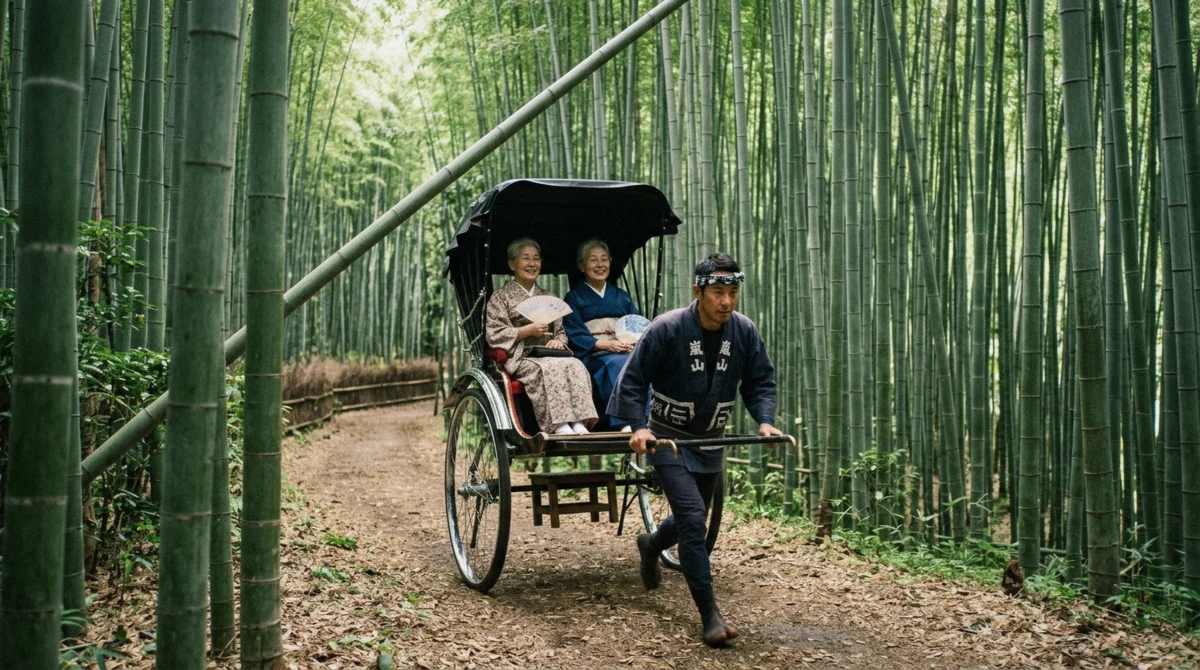
What separates a flat photograph from the postcard version is a lane most walkers never see: a fenced, rickshaw-only track running through the same bamboo, closed to pedestrians and worked exclusively by Ebisuya's pullers. Fences, lamp posts and the crowd never enter that frame, which is the entire reason the rickshaw tour costs anything at all. Booked ahead it runs from $50.49 per person; the same ride taken on arrival at the bridge costs ¥7,500 to ¥9,000, roughly the same money for less certainty about the departure time.
- The public path: free, 400 meters, Nonomiya Shrine to the Okochi-Sanso gate
- The rickshaw lane: the closed stretch that produces the empty-frame photograph, Ebisuya only
- Tenryu-ji sits beside the grove with its own entry fee; the DIY hike guide covers its north-side route in full
- Okochi-Sanso and the monkey park extension both sit past the grove for travelers with more than fifteen minutes to spend
The Honest Downsides
Four things people regret
None of these ruin the visit. All of them are easier to accept knowing about them before you arrive rather than while standing in a line of phones.
- Ten to fifteen minutes is genuinely short. Travelers who plan a whole morning around the grove alone are the ones most likely to leave disappointed; it rewards people who pair it with something else nearby
- Midday is genuinely crowded. Between 10:00 and 16:00 the path narrows to a shuffle for photographs, and the effect is worse the closer you get to cherry-blossom season or the maple weeks in November
- The famous empty-frame shot requires the rickshaw lane. On foot, fences, lamp posts and other visitors are in most frames, which surprises people who only saw the curated version online
- There is no shade break inside the grove itself, and Kyoto's summer humidity makes even a fifteen-minute walk feel longer than it is
What is not a downside
The path itself is well kept: no vendors crowding the walkway, no gaudy signage breaking the sightlines, and the bamboo genuinely as dense as it looks in photographs from any angle you pick. For a sight this heavily searched, it costs nothing to test for yourself, which removes most of the buyer's remorse that follows a paid attraction that underdelivers.
When It Is Worth It Most
The hour matters more than the season
The path is close to empty before 8:00 and thins out again after 17:00, in every month of the year. Between those windows, coaches and the morning tour fleet fill it from around 10:00 through 16:00, and the crowding compounds in the weeks around cherry blossom and maple color. Our full month-by-month guide covers the seasonal picture and the illumination question in depth; the short version is that the clock decides your experience more than the calendar does.
- Best hour: before 8:00 for a near-empty path, or after 17:00 for the same effect with softer light
- Worst hour: 10:00 to 16:00, worse still on weekends and during blossom or maple weeks
- The path itself never changes with the season; only the crowd around it does
Who Should Go, and Who Should Skip It
Doing it on your own
Walking the free path costs nothing and takes fifteen minutes from the JR Saga-Arashiyama station, so for a solo traveler or a couple with a rental transit pass, there is little reason not to. Our hike guide sets out the full self-guided loop, real transport costs, and a dawn-start plan for readers who want to build a whole free morning around it rather than just the corridor itself.
Who Should Go and Who Should Skip It
If you are traveling with young children
go. The path is flat gravel, short, and free, and pairs well with the monkey park a little further on if the kids have energy left
If you want the empty-frame photograph everyone else has
book the rickshaw tour for the closed lane, or walk the free path before 8:00 and accept a few strangers in frame
If you have one day in Kyoto and love temples more than photo stops
think twice about spending more than fifteen minutes here; Kiyomizu-dera and Fushimi Inari reward a full morning far more than the grove does
If you need step-free access
the path is gravel and gently uphill, manageable for most wheelchairs and strollers with some care, unlike several other Arashiyama sights
If you are debating this against Fushimi Inari
they are not really the same trip. Fushimi Inari is a torii-lined mountain hike that can take hours; the bamboo grove is a fifteen-minute corridor. The all-inclusive bus day covers both in one itinerary
The Case For and Against
What we genuinely like
- Free entry, open 24 hours, no gate and no ticket to lose
- A genuinely photogenic corridor that holds up in person, not just in filtered photos
- Short enough to fit into almost any Kyoto itinerary without derailing the day
- Flat, gravel path manageable for strollers and most wheelchairs
- Pairs naturally with Tenryu-ji, Okochi-Sanso and the monkey park next door
The honest downsides
- Crowded from 10:00 to 16:00 nearly every day of the year
- The famous empty-lane photograph requires paying for the rickshaw
- Only ten to fifteen minutes of actual walking, which disappoints travelers expecting more
- No shade break inside the grove during Kyoto's humid summer months
- November's maple weeks turn the whole district into the busiest stretch of the calendar
Who it's NOT for: Travelers expecting a half-day nature excursion, anyone whose only free window is a midday weekend in cherry blossom or maple season, and photographers who assume the postcard shot is free.
How to Book Without Overpaying
What we would book
If the closed-lane photograph is the point of the visit, the rickshaw tour from $50.49 is the only product that reliably delivers it, and free cancellation up to 24 hours out means a bad-weather morning costs nothing to move. If the grove is one stop in a bigger day and temples matter more, the all-inclusive bus tour from $95.94 bundles Kiyomizu-dera, Kinkaku-ji and Fushimi Inari with entry tickets already handled. Travelers who want the scenic train and a riverboat added to the day instead should look at the train, boat and onsen combination, which runs from $150 and pauses the train leg only in January and February.
However you plan the morning, the same rule holds: book for before 8:00 or after 17:00 if the crowd matters to you, and check the full Sagano Bamboo Forest tour comparison before deciding, since the six listings differ more in what else they include than in the grove itself.
What each fix costs
| The problem | The fix | Cost |
|---|---|---|
| Crowds ruin the corridor | Walk in before 8:00 | Free |
| The postcard shot is fenced off | The rickshaw's closed lane | From $50.49 per person |
| 15 minutes feels thin for the trip out | Add Tenryu-ji's garden via the north gate | ¥500 |
| You want the whole city, not one grove | A bundled bus day with four admissions | From $95.94 |
| You want it explained, not just seen | A private guide for four hours | $126.23 |
Questions About Whether It Is Worth It
How much time do you actually need at the bamboo forest?
Fifteen to thirty minutes for the grove path itself, which runs about 400 meters and takes 10 to 15 minutes to walk end to end at an unhurried pace. Budget half a day if you are adding Tenryu-ji, Okochi-Sanso or the monkey park, all of which sit within a few minutes' walk of the path.
Is it free to enter the Sagano Bamboo Forest?
Yes. There has been no entry fee since 2015 and the grove has no gate, so it is open around the clock. Nearby sights like Tenryu-ji and Okochi-Sanso charge their own separate entry fees, covered in the DIY hike guide.
Is the Sagano Bamboo Forest the same as the Arashiyama Bamboo Grove?
Yes, one place with two names. Sagano is the district name, Arashiyama is the neighborhood most visitors say out loud, and both refer to the same bamboo path.
Which is better, Fushimi Inari or the bamboo forest?
They answer different questions rather than compete. Fushimi Inari is a mountain hike through thousands of red torii gates that can take hours; the bamboo forest is a free, fifteen-minute corridor. Most itineraries fit both rather than choosing, and the all-inclusive bus day covers them on the same ticket.
Why do some visitors say the bamboo forest is overrated?
Almost always the same two reasons: arriving at midday into a crowd, and expecting the empty-lane photograph without knowing it comes from the paid rickshaw lane rather than the free path. Both are avoidable with a few minutes of planning before you go.
Is there a quieter alternative nearby?
Adashino Nenbutsuji has a shorter bamboo path of its own for ¥500, and Kodai-ji keeps a small grove on its grounds for the same ¥500 entry. Neither matches the scale of the main path, but both are noticeably calmer.
Ask people who left happy how they timed it and the answer is almost always the same: they arrived when almost nobody else had, and they treated the walk as ten minutes rather than a destination in itself. Do that and the question mostly answers itself before you even reach the gate.